HOA Management Software for Small Management Companies
The System Does
the Remembering.
There is no back office. There is you, and there is whoever answers the phone when you cannot.
Free. Running this afternoon. Nothing to migrate.
Getting Started
Running This Afternoon,
on What You Already Have.
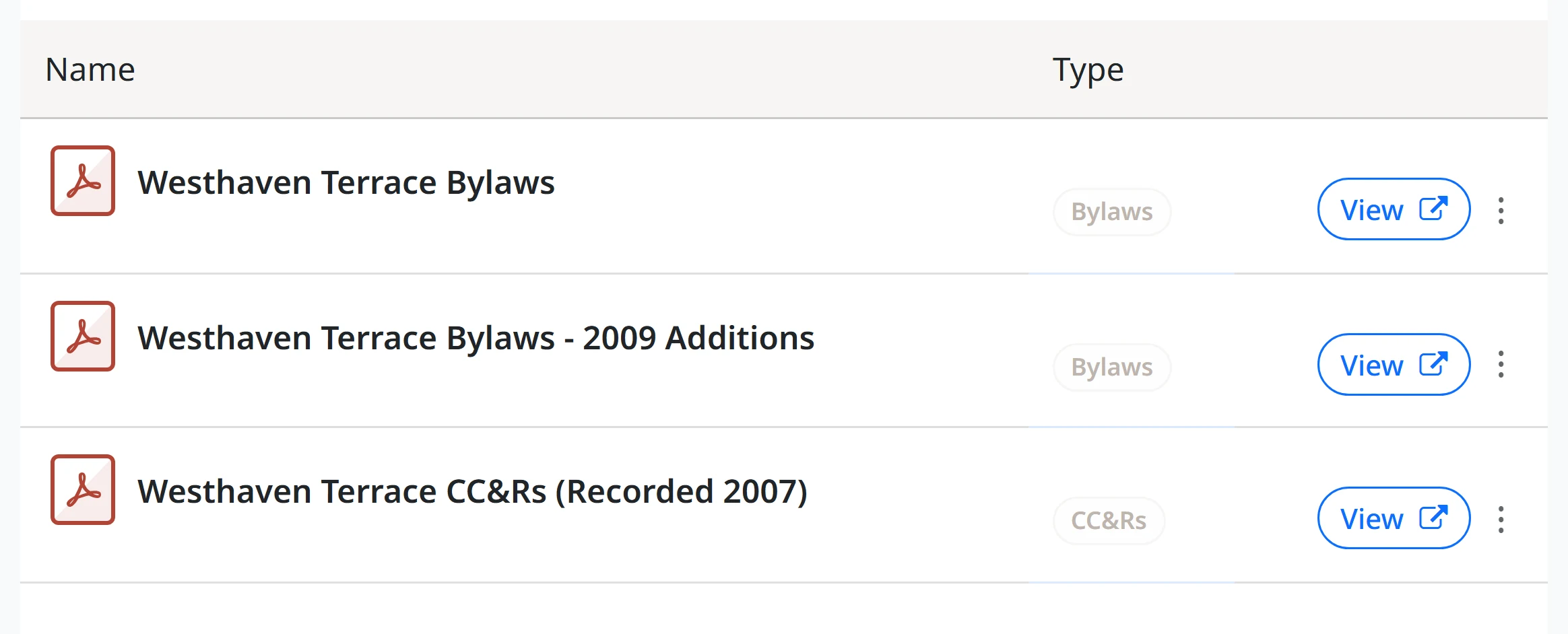
Setup is four things you can do in one sitting: your firm, the communities you manage, the governing documents you are already holding as PDFs, and the roster. That is the whole list.
There is no data conversion, no ledger to reconcile, no cutover weekend and no vendor to give notice to. Start with one association — the one whose next deadline is bothering you — and leave the rest exactly where they are.
Nothing has to be finished before it is useful. The documents you upload start doing work the moment they land.
No Back Office
Everything Escalates to You.
There Is No One Else.
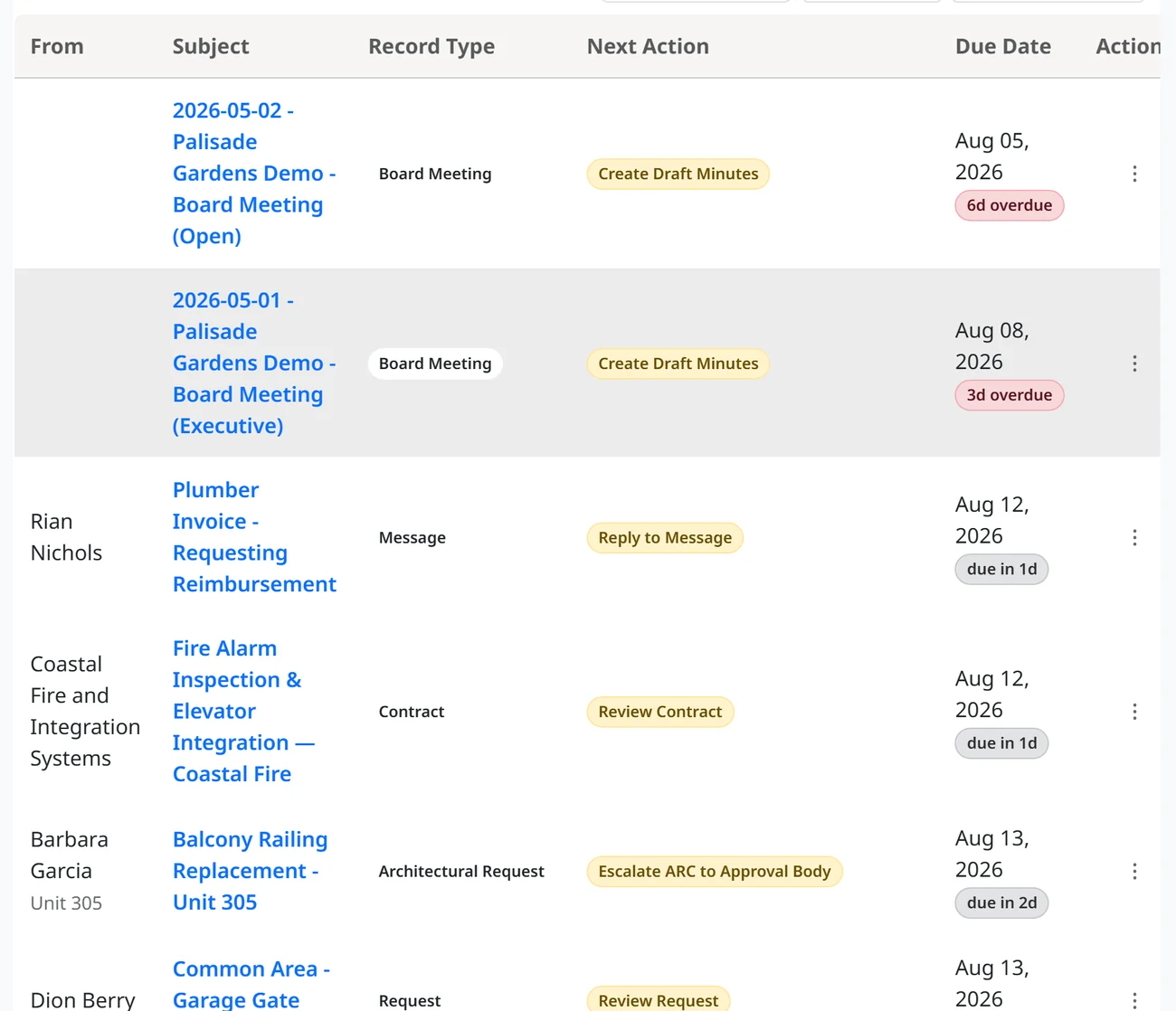
You are the accounting department, the compliance department and the after-hours line, and the only thing that decides which one you are is whichever thing broke most recently.
The work that keeps you awake is not the hard work. It is the remembering: the notice period, the renewal, the thing a board member said in passing four weeks ago.
The system does the remembering. Deadlines surface on their own, notice periods are checked before a date is set, and nothing waits on you noticing it.
Look Like the Firm You Compete With
The Same Packet,
Every Month.
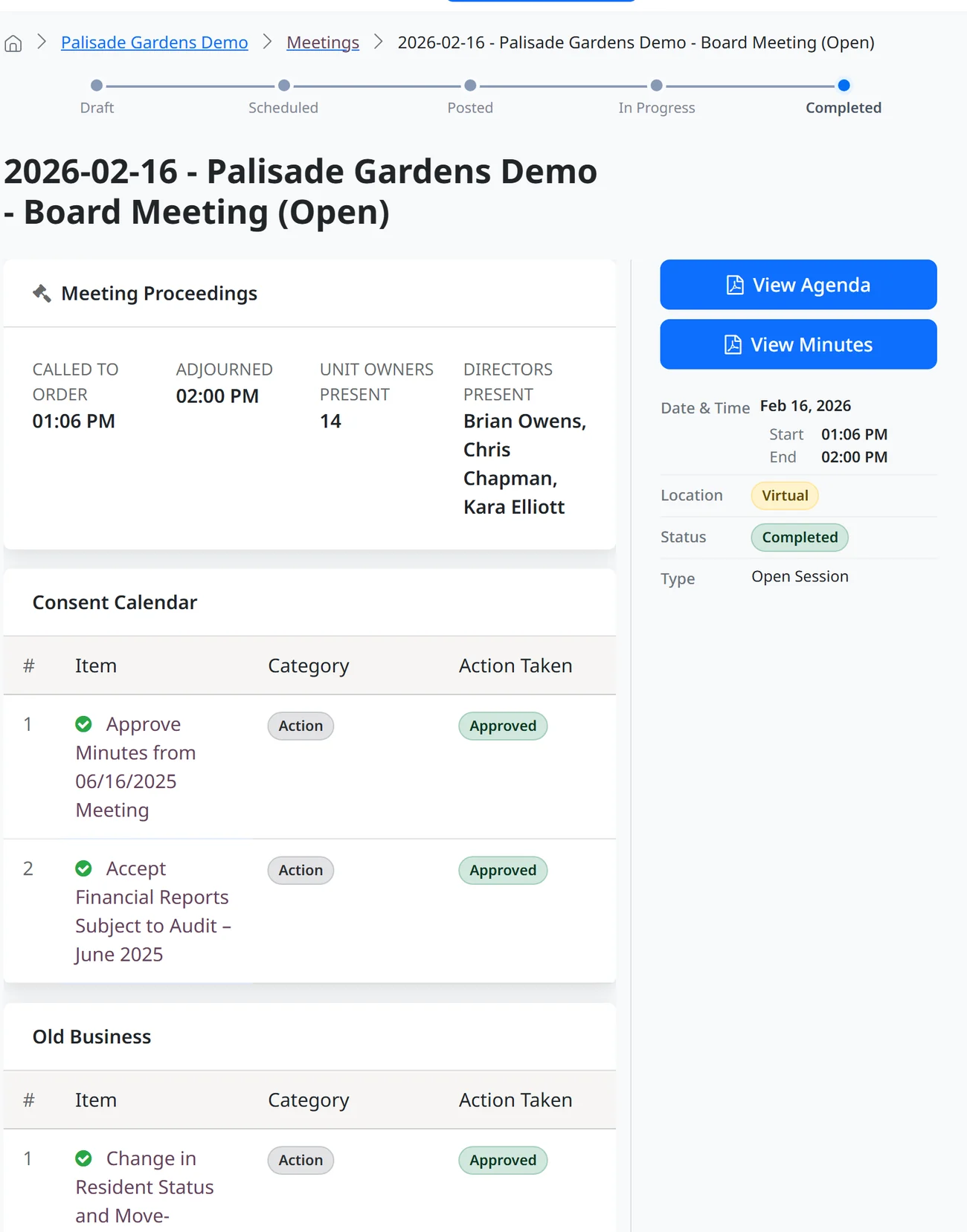
You lose work to firms with departments, not to firms with better judgment. What they have is a board packet that arrives on time and looks the same every month.
Statements, minutes, budget packets and owner portals that a twenty-association firm would be proud of, produced by the system rather than by an evening you do not have.
A board that can answer its own owners stops phoning you to do it.
When You Are Ready, Not Before
By the Time You Move the Books,
the Move Is Mostly Done.
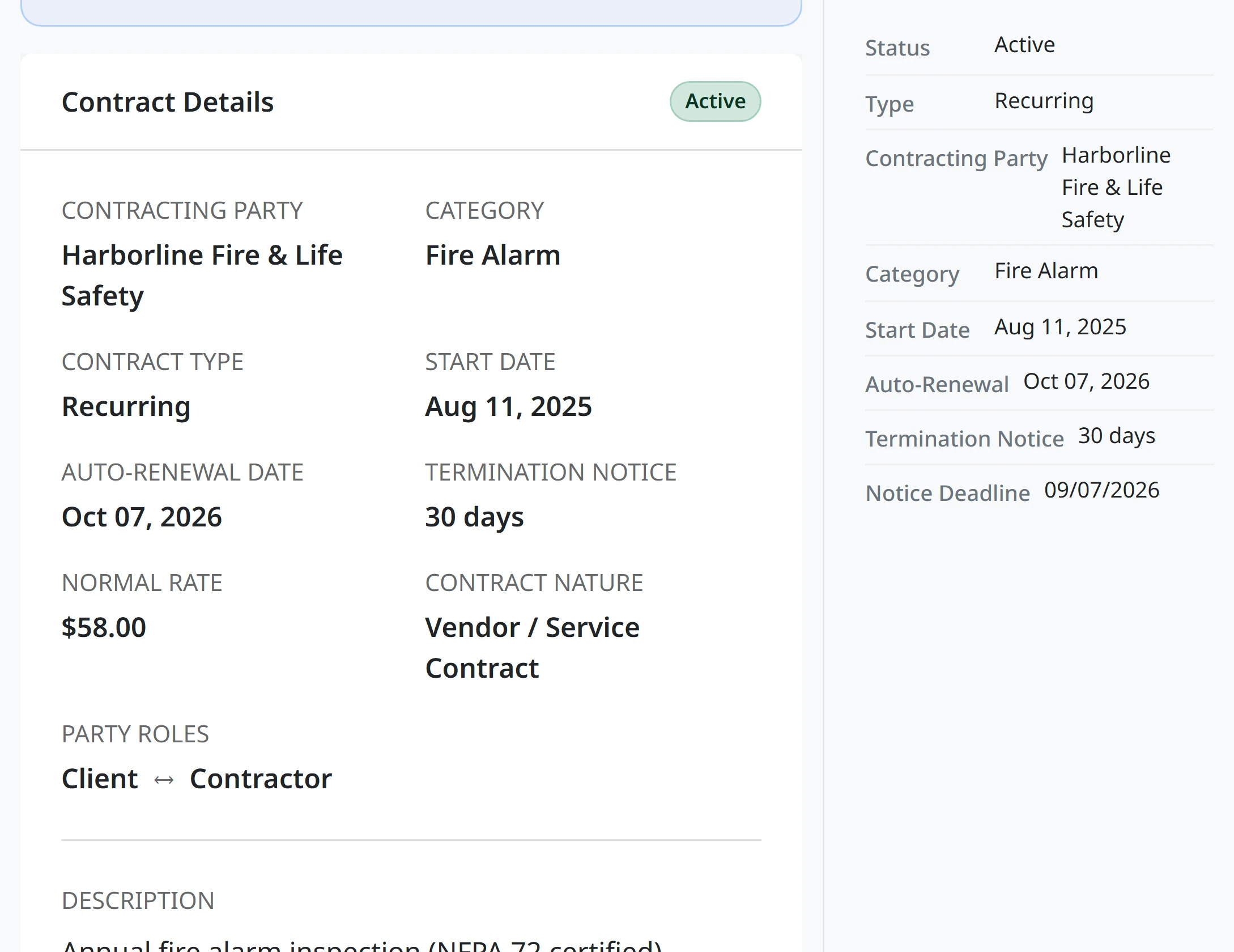
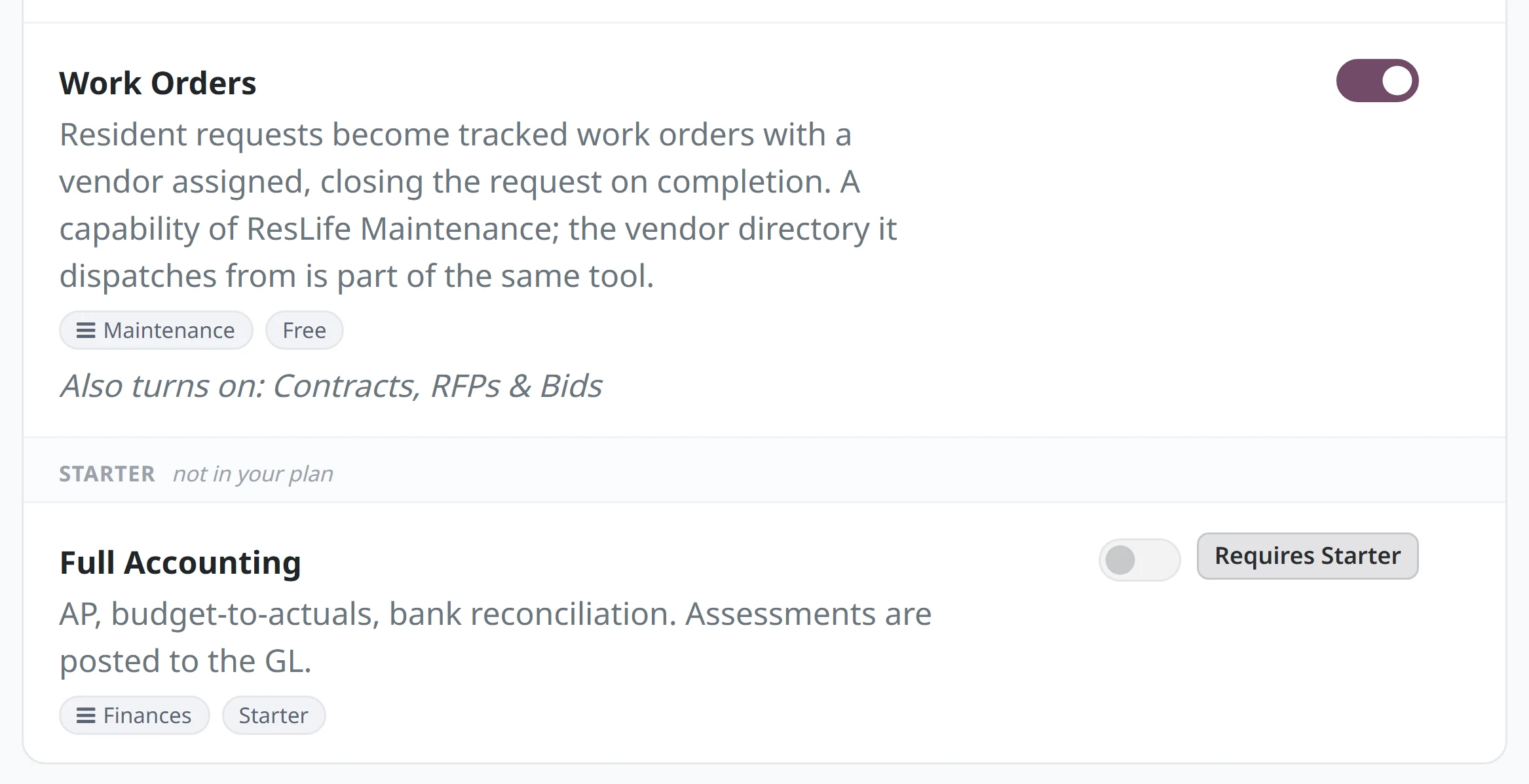
We are not asking you to change accounting systems. Take the operational layer — budgets, board meetings, rules, violations, maintenance, contracts, the docket and the portals — which is free permanently, and keep your books exactly where they are.
Then, whenever it suits you, look at what moving the back office would actually involve. The governing documents are here. The communities, the units and the people are here. The vendors and the contracts are here. That is the part of a system change that costs real money, and it was absorbed a piece at a time while you were getting value out of it.
What it is not is a six-month implementation. There is no discovery phase, no consultant and no go-live date to defend, because the work those projects spend their months on — getting the documents, the communities, the units, the people and the vendors into the new system — is the part you did gradually, for free, while already running on it.
What is left by then is the ledger and the open balances. The dreaded part of the migration is the part you have already done.
What the Move Costs
Your Own Books Are on Us
Through the End of 2027.
When you do switch the books, it happens a community at a time at a fiscal-year boundary you choose, not in one weekend across the whole portfolio. You pick the order and the pace, and you can stop after one to see how it went.
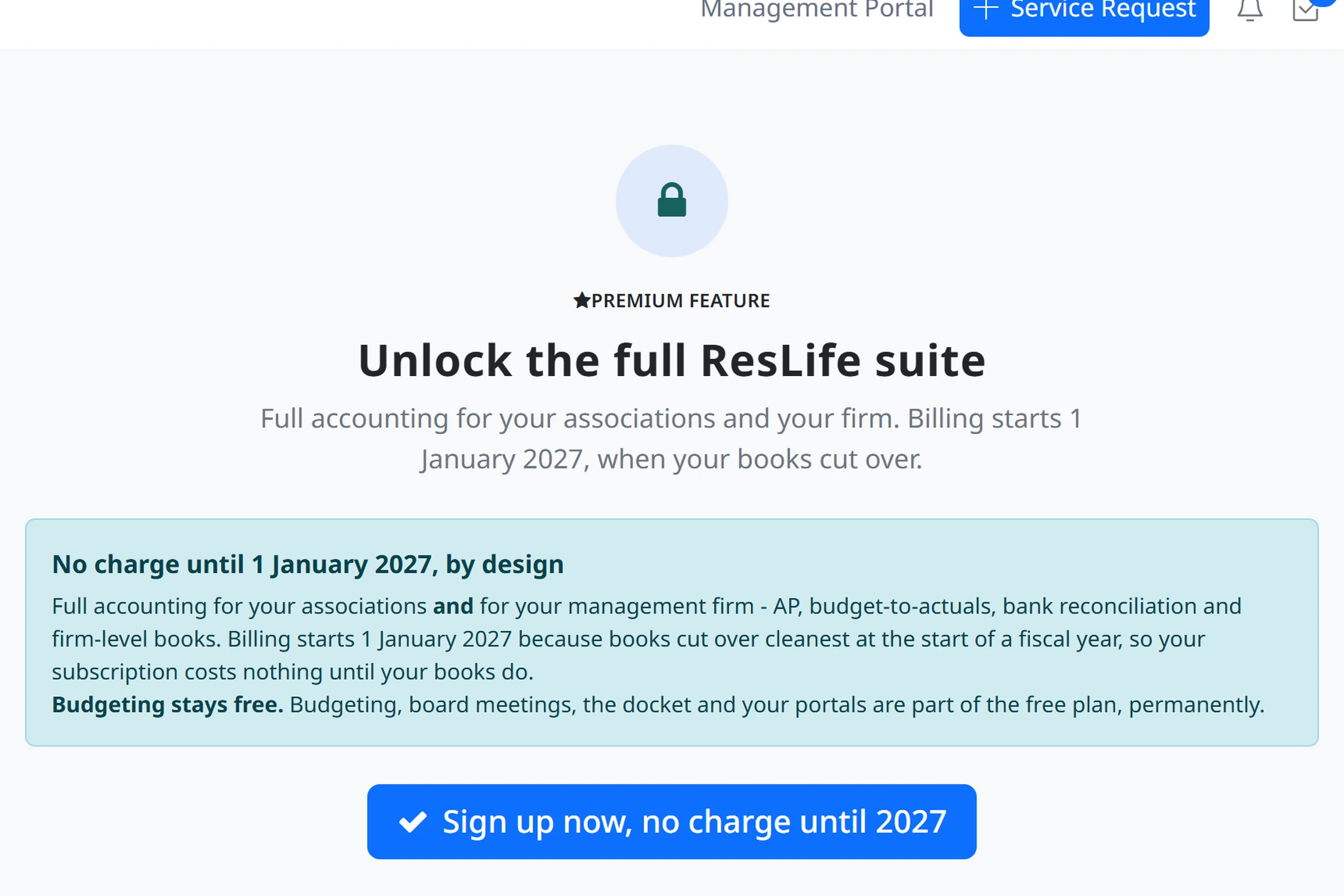
Running your own back office — accounting, receivables and payables for the management company itself — is normally $250 a month per legal entity. It is free through the end of 2027 if you run a single legal entity. Whether you move next quarter or in a year, the meter does not start before then.
More than one legal entity usually means more than one set of books and more people to bring across, so those firms get a supported implementation instead of a self-serve start. Worth a conversation rather than a sign-up page.
Single Point of Failure
Nothing Waits
on You Being There.
Every deadline, every open item and every decision lives somewhere other than your head.
When you take a week off, the association does not.
What You Stop Carrying
You Stop Being the Part
That Cannot Be Replaced.
The work that keeps you awake was never the hard work. It was holding the notice period, the renewal and the thing a board member said in passing, in the only place they were written down.
Do we have to move our accounting to use this?
No, and most firms should not at first. The operational layer — budgets, board meetings, rules, violations, maintenance, contracts, the docket and the resident portals — is free permanently and runs alongside whatever you keep your books in. If you later decide to move the back office, the governing documents, communities, units, people, vendors and contracts are already loaded, so what remains is the ledger and the open balances at a fiscal-year boundary you pick. Prior books and open receivables come across one association at a time, at a boundary you pick. Running your own back office in ResLife is free through the end of 2027 either way, for firms on a single legal entity.
What is the best HOA software for a small management company?
One that does not assume you have departments. The operational tools are free permanently, there is no seat count, and nothing needs to be migrated for you to use them on one association tomorrow.
We are two people. Is this too much system for us?
Each tool works on its own and the ones you do not switch on are not there. A two-person firm can run budgets and board meetings and never see a bid tab.
How do we look as credible as a firm with a back office?
Board packets, statements and minutes that arrive on time and look the same every month. That is what you lose work to, and it is produced rather than assembled.
Put the Remembering
Somewhere Else.
Start with one association and see what stops needing you.
A free tool you can use on its own. Nothing to migrate.