HOA Maintenance and Vendor Management
Why It Matters
It Was Never
One Work Order.
A leak, a broken gate, a sprinkler running at noon. Reported by email, by phone, or to your face in the car park. Each one is small enough to write on a sticky note, call somebody, and hope. Forty a week across a book of associations is not small, and the part that fails is never the calling. It is knowing which ones came back.
RFPs and Bids
Are We Being Overcharged?
Now the Board Can Answer That.
Every board suspects it at some point: the same vendor, year after year, a price nobody has tested, and no clean way to test it. Most associations put up with it because re-bidding means writing the scope again and turning three replies in three formats into something a board can compare.
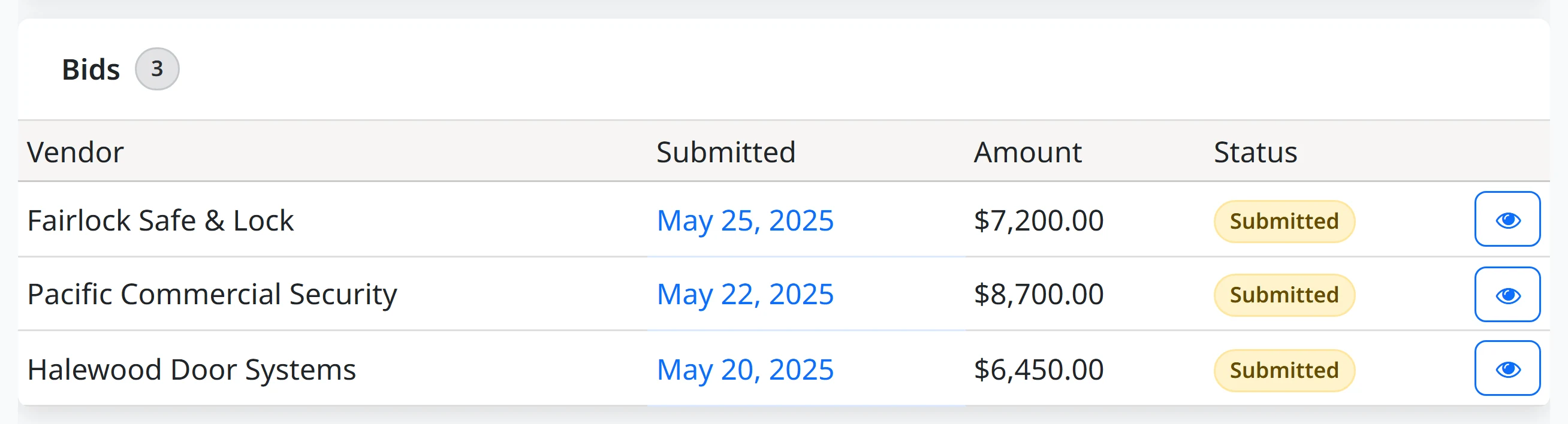
Issue one written scope, send it to as many vendors as you like, and read the bids side by side against that same scope. Every price is tied to exactly what it buys, so a low number that quietly leaves out the permit or the haul-away shows itself. Then escalate the comparison into the board meeting, where the directors decide with every bid in front of them and the minutes record that competitive bidding happened.
An award becomes a job or an agreement. Ongoing agreements carry into ResLife Contracts, which watches their renewal dates.
Report to Close-Out
You Decide What
Becomes a Job.
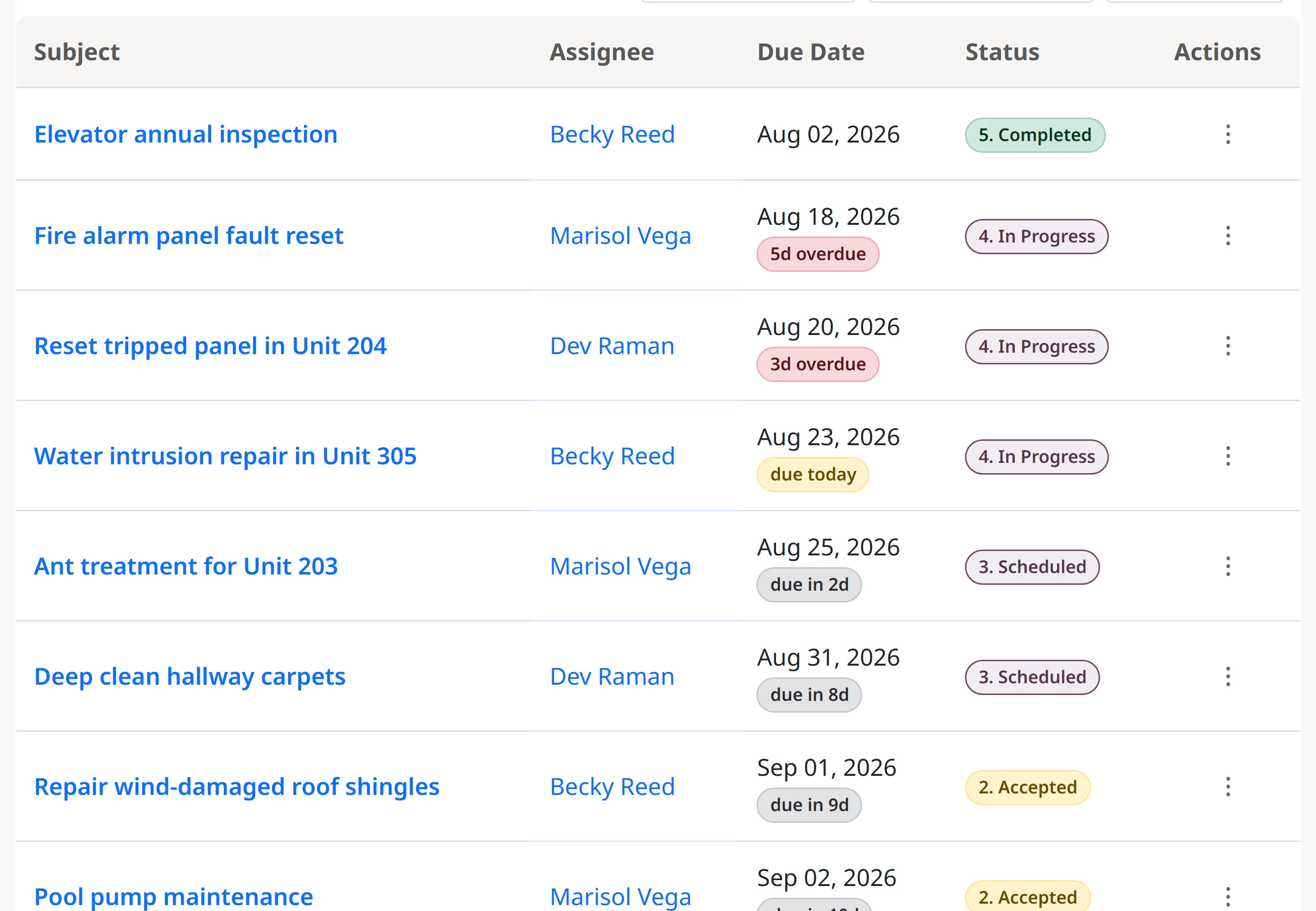
Residents report what they see, and so do you. Those land as requests, not as work. You choose which ones become a work order, and from there it carries its own status: assigned, accepted, scheduled, in progress, completed. Completing it closes the request the resident opened, so they hear back without you remembering to tell them.
Flag one as an emergency and a banner goes up across that association’s portal naming the incident and where it has got to. Everyone about to report the same burst pipe can see it is already known.
One cross-association queue holds all of it, whether you want the whole book or the single community a board is asking about.
Dispatch
The Right Vendor Is Already There.
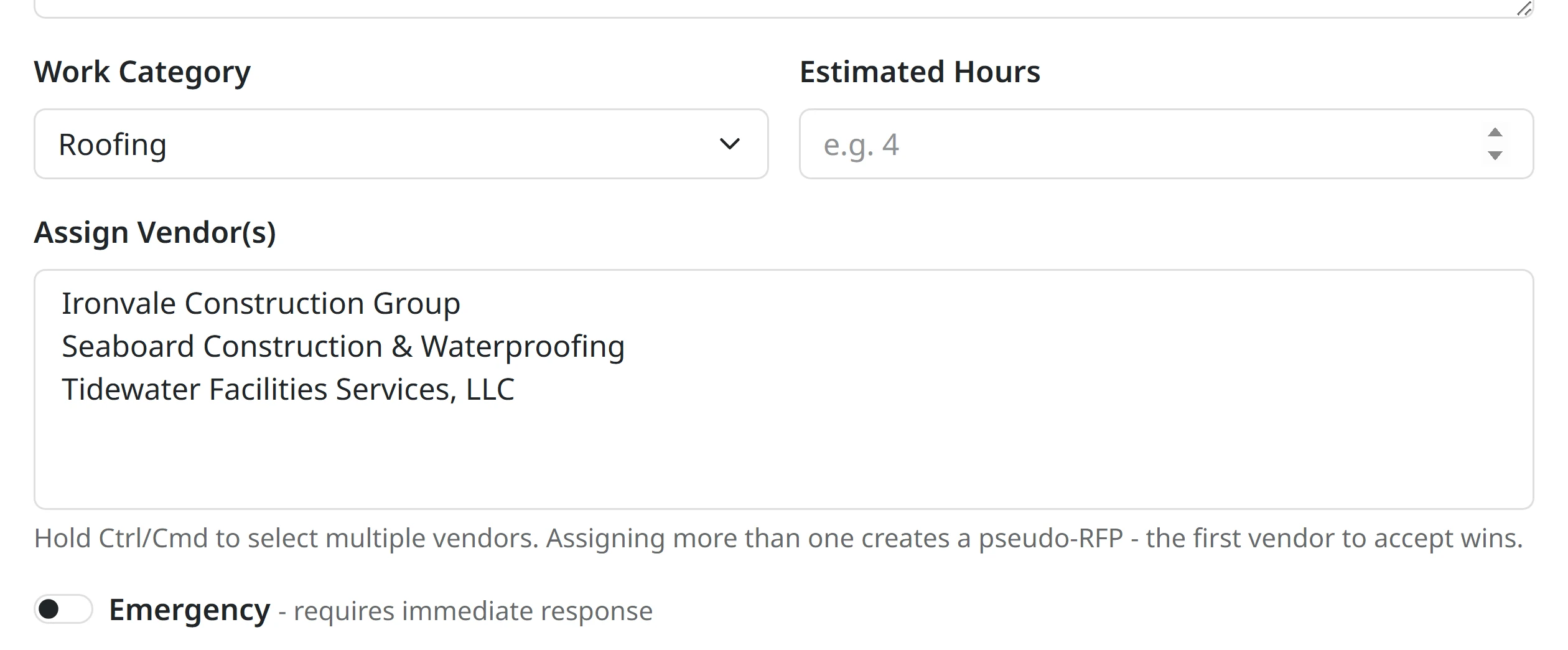
Vendors are held once, with preferred vendors set per work category, so sending a job out starts from a list rather than a search through old email for who did the roof last time. A manager who takes over the account inherits that knowledge instead of rebuilding it.
The invoice for that roof repair
- ResLife Vendor posts progress on the job you assigned.
- ResLife Vendor submits the invoice against that same work order.
- You Approve it.
- ResLife Posts to accounts payable, matched to the job and the budget line.
One step yours, and no bill that nobody can place.
See ResLife FinancesWith ResLife Finances
The Bill Arrives Where
the Work Happened.
Work orders, bidding and contracts are free and yours to run without ever paying us. Add ResLife Finances and the vendor gets a portal of their own: they update the job you assigned, submit the invoice against that same work order, and it lands in accounts payable already matched to the work and the budget line it belongs to.
No emailed PDF, no re-keying it into a second system, and no board member asking six months later what that payment was for.
The vendor portal and accounts payable are part of the paid tiers. Nothing about the free tools changes if you never turn them on.
What You Stop Carrying
Nothing Is Waiting
on You to Remember.
The list of what is still outstanding stops being something you hold between communities. When an owner asks whether their gate was ever fixed, you are not guessing, and when a board asks what was done this quarter the answer is already assembled.
What Managers Ask About Maintenance Requests.
Can residents submit maintenance requests themselves?
Yes, through the resident portal, and a request that arrives by email lands in the same place. Either way it becomes a record rather than a message, and the resident can see it is being handled.
Can I see open work across every association I manage?
Yes. It sits in one cross-association queue you can read whole or filter down to a single community, which is the view that matters when the volume is arriving from thirty boards rather than one.
How do we know a vendor is not overcharging the association?
Put the job out on one written scope and let several vendors bid on that exact scope. The bids sit side by side, so a price is always tied to what it buys and an omission is visible rather than discovered on the invoice. The comparison goes onto the board agenda and the decision is minuted, which is also the record that competitive bidding happened.
Can I use work orders without the bidding side?
The tabs come together, but nothing obliges you to use them. Turning Maintenance on for a community gives it work orders, bidding, contracts and the vendor portal; a small association can dispatch work and simply never open the others. Turning it off removes all of it.
Put This Week’s Requests
Somewhere You Can See Them.
Start with one community and the jobs already open in it.