HOA Rule-Making Tool
Every Rule You Adopt,
Adopted Correctly.
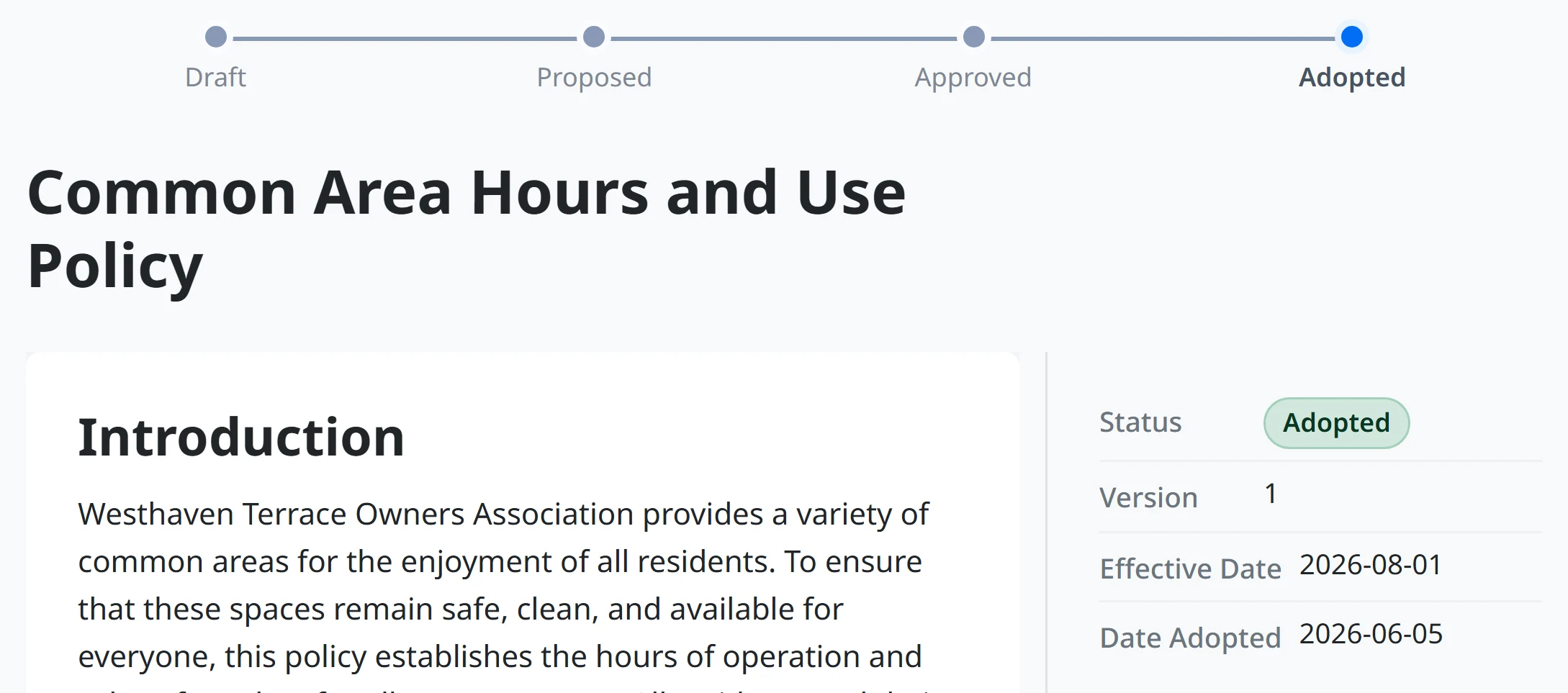
The statutory rule change process, start to finish. Draft it, notice it, adopt it, and let the system hold the dates so the rule survives the first person who disputes it.
A free tool you can use on its own. Nothing to migrate.
Why It Matters
A Rule Is Only as Good
as the Way It Was Adopted.
Boards change rules constantly. Parking, pets, short-term rentals, architectural standards. The change is easy to write and easy to get wrong, and nobody finds out until an owner refuses to pay the fine and asks how the rule was passed.
Changing the pet rule
- You Describe the change in one sentence.
- ResLife Reads the CC&Rs, the bylaws and the statute for your state.
- ResLife Returns a draft in the structure your state expects.
- ResLife Quotes the clause that gives the board power to make it.
- ResLife Flags any protected use the board may not restrict.
- You Edit the wording. The framework is already right.
Two steps yours. Four done before you read it.
Where the documents are read fromDrafting
The Draft Cites Its Own Authority.
Describe the change in a sentence. What comes back is a complete first draft in the structure your state expects, quoting the clause in your CC&Rs that gives the board power to make it, and flagging protected uses the board is not allowed to restrict. You edit the language, not the framework. The documents it reads from are held in ResLife Compliance.
That draft is produced by a short prompt to a LLM, which reads your governing documents and the statutes that apply where the association sits. It is a starting point, not an authority. You and your board still decide the wording.
The Comment Period
The Notice Period
Cannot Be Missed.
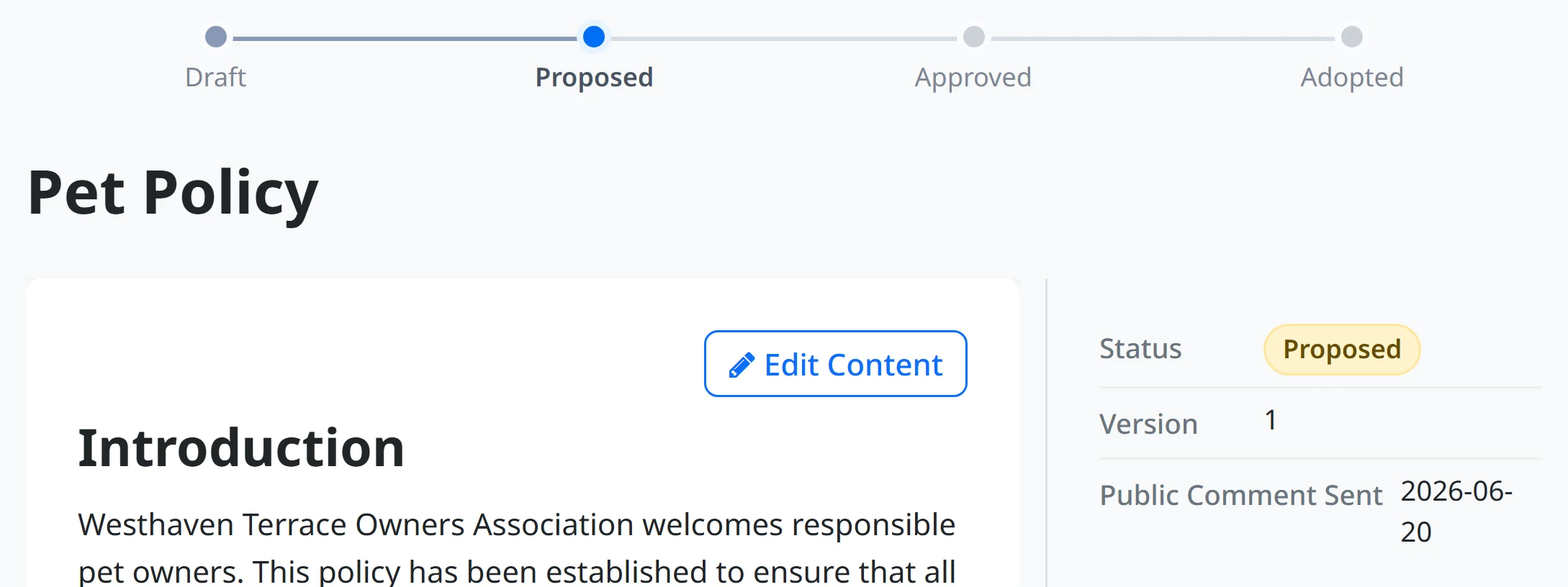
Your state sets how long members must be given to comment before a board can adopt a rule change. In California it is 28 days, under Civ. Code §4360(a). ResLife counts from the date the notice went out and refuses to schedule the adopting meeting inside that window, naming the earliest date that works instead. It is a hard block, not a reminder.
The board votes to adopt
- You Move and vote at the meeting.
- ResLife Records the vote against the rule.
- ResLife Generates the notice to members.
- ResLife Renders the adopted rule as a PDF.
- ResLife Supersedes the version it replaces.
- ResLife Adds the new text to what compliance reads from then on.
One step yours. Five filed for you.
How the meeting itself runsAdoption
Adoption Files Itself.
Proposing a rule creates its agenda item and sends owners the comment notice. Adopting it supersedes the version it replaces, queues the notice of adoption with the rule PDF on the Docket against its deadline, and adds the new text to what the compliance engine reads from then on. A resident complaint can start the whole cycle as a proposed rule.
What You Stop Carrying
The Deadline
Holds Itself.
You stop keeping the date in your head, and the board stops wondering whether the last rule change would hold up if somebody questioned it.
What Boards Ask Before Changing a Rule.
How long is the notice period for an HOA rule change in California?
Twenty-eight days. Civ. Code §4360(a) requires general notice to members at least 28 days before the board adopts the change. Other states set their own period, and some set none at all. ResLife applies whichever rule governs your association and enforces it when the adopting meeting is scheduled.
Can a board adopt an operating rule that conflicts with the CC&Rs?
No. The recorded CC&Rs sit above operating rules everywhere. ResLife drafts against your association’s own documents and names the clause the board is relying on, so a conflict surfaces before the vote rather than after it.
How is this different from keeping rule changes in a document folder?
A folder holds the text. It does not know when notice went out, whether 28 days have passed, which version is current, or which rules your compliance checks should be reading. ResLife keeps the rule and its process in one record.
Take Your Next Rule Change
Through the Process.
Draft it, notice it, adopt it, and have the record to show for it.