HOA Compliance and Document Management
It Runs on Your
Governing Documents.
The layer underneath everything else. Your recorded documents and the statutes of the state you sit in, read once and then applied by every workflow that has a limit to respect.
Included with every association. There is nothing to switch on.
Why It Matters
Every Other Tool Is Only
as Right as What It Reads.
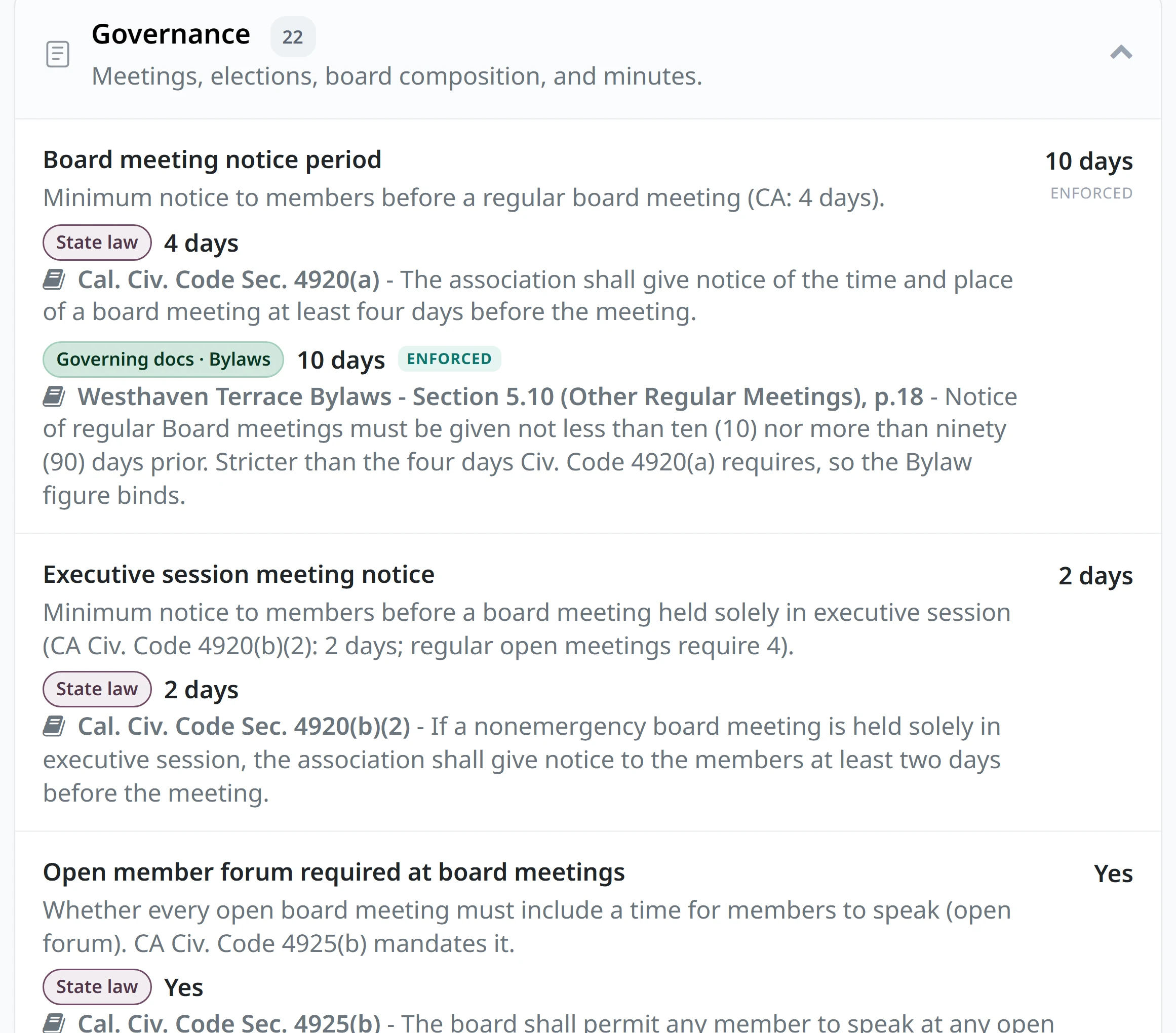
A budget that respects the increase cap, a rule change held for the notice period, a hearing scheduled far enough out, a contract inside the term your documents allow. None of that is a setting somebody remembered to configure. It comes from one place, and this is the page about that place.
The Documents
Drop In What You Already Have.
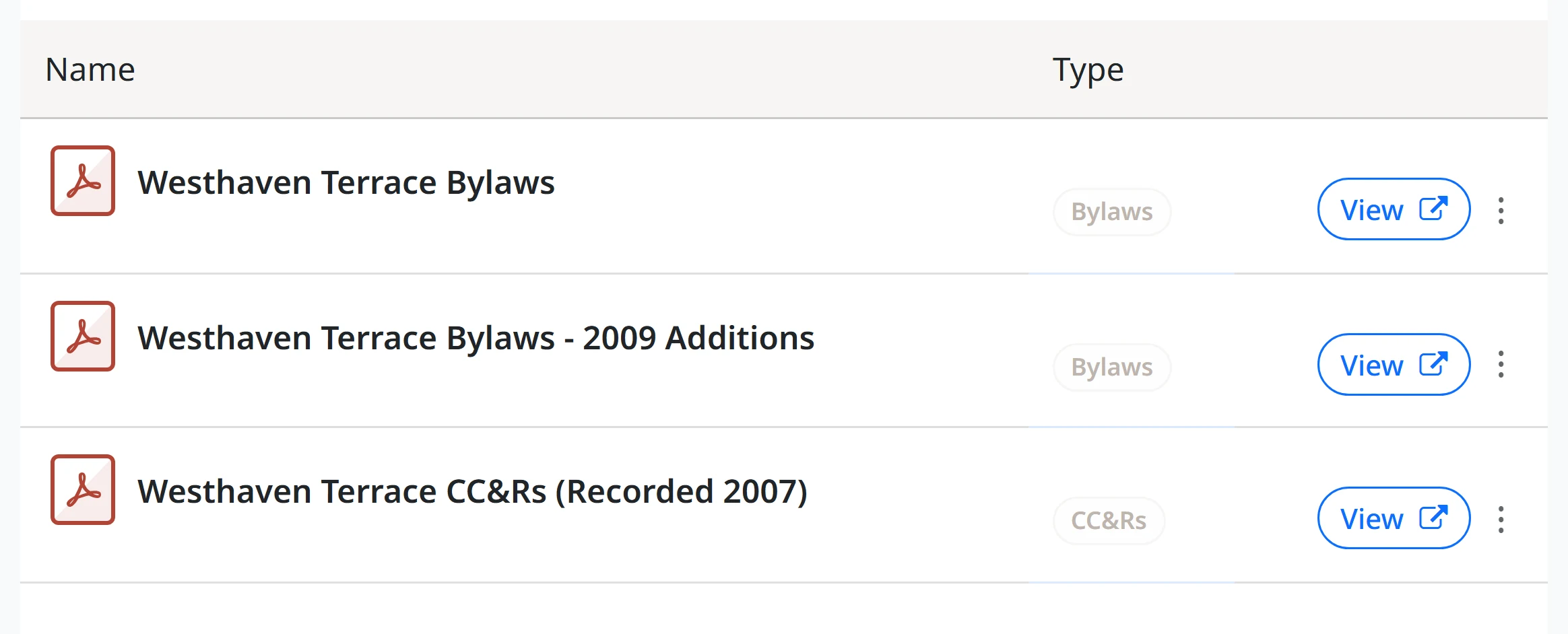
CC&Rs, bylaws, rules, budgets, financials, reserve studies, minutes, insurance, contracts. Each one is read and filed in the right folder without anyone sorting them, and from that point they are the source the rest of the system reasons over. Members see the documents they are entitled to see, and executive-session material is kept out of member-visible storage rather than relying on somebody remembering.
The Governing Values
Your Documents on Top
of Your State’s Law.
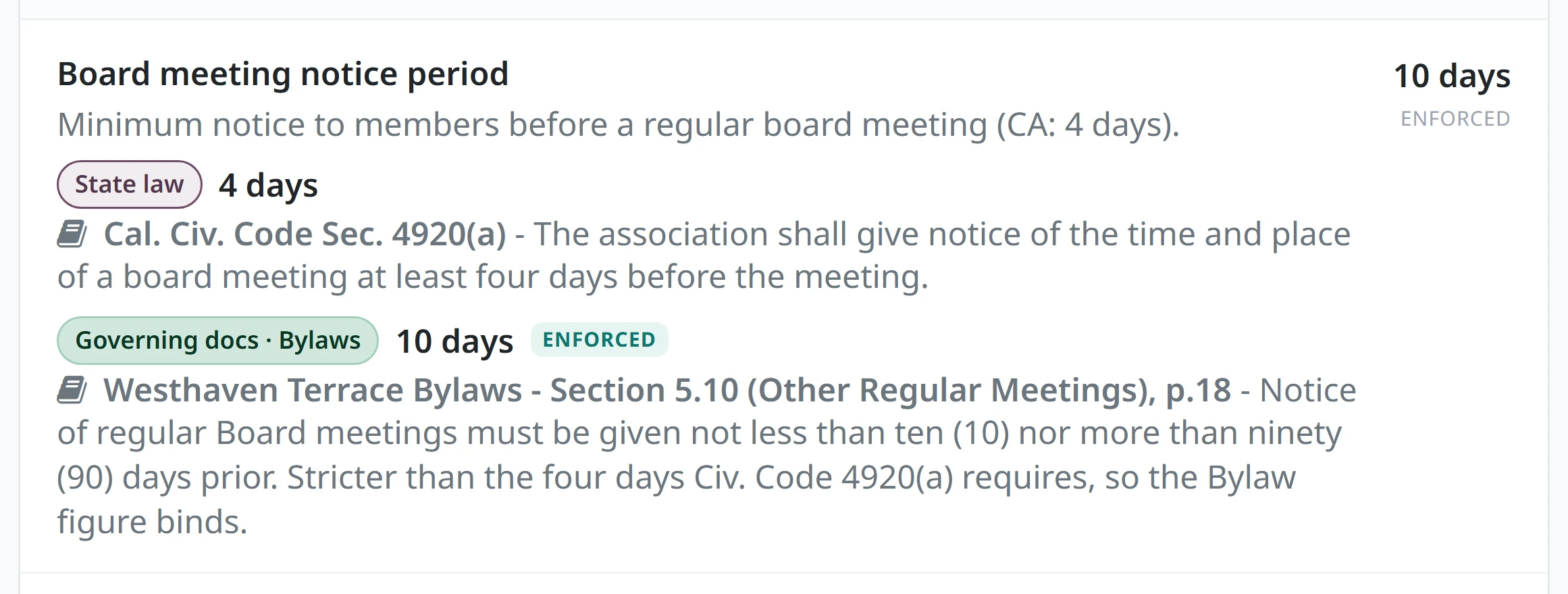
Assessment increase caps, special assessment limits, notice periods, hearing windows, contract terms, the value that needs a member vote. The statutes for the state the association sits in are layered with the association’s own recorded values, so what any workflow enforces is the rule that actually governs this community rather than a generic default.
Each value carries where it came from: the instrument, the code section, a plain-language summary, and the governing language quoted word for word.
Look It Up
Read-Only, and That Is the Point.
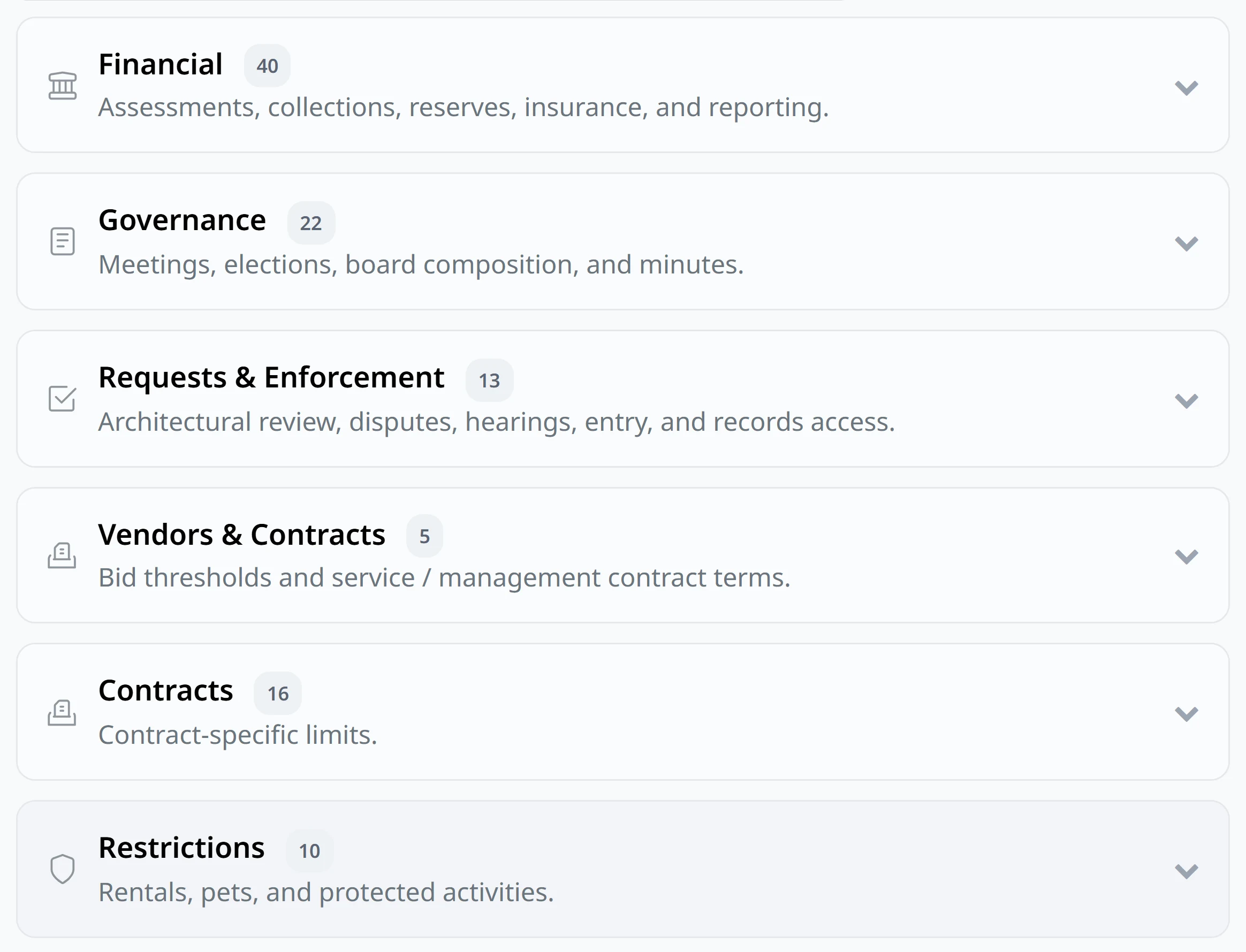
Managers and board members can open the whole catalog from association settings and see every value the community is held to, grouped by area, with its provenance beside it. It answers the question a board asks in the room, without waiting on anyone.
Nothing here is editable, because a statutory floor or ceiling is not something an association can switch off. Changing a regulated value means amending the bylaws or the CC&Rs, and then the documents say so.
What You Stop Carrying
You Stop Being
the Compliance Department.
The limits stop living in your memory and in the parts of the documents you happen to have read. When a board member asks whether the association is allowed to do something, the answer is on a screen with the citation attached.
What Boards Ask About Compliance.
Do we have to turn this on?
No. It is included with every association and cannot be switched off, because the tools above it depend on it. There is no plan that does not have it.
What happens when our CC&Rs and the statute disagree?
A controlling statute generally overrides a conflicting provision in an association’s own documents, and the values are layered that way. Where two sources address the same thing, the record shows both and which one governs.
Is this legal advice?
No. It shows the association its own governing documents and the statutes that apply, with the source quoted so a board can check any of it against the original or take it to counsel. Decisions stay with the board.
See What Your Own Documents
Already Say.
Upload the governing documents you have and read the limits back with the citations attached.